
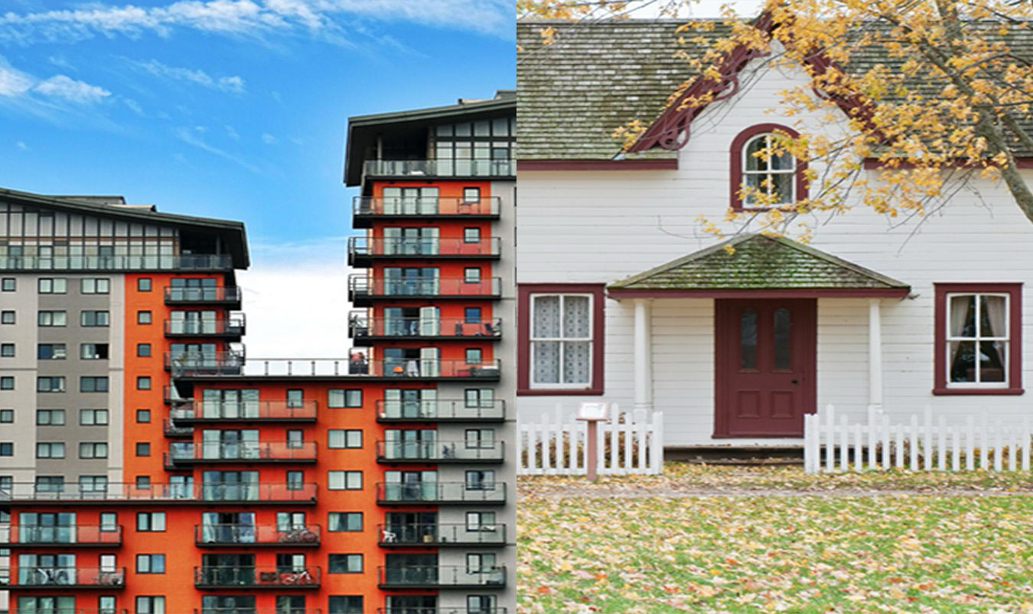
More and more Poles are choosing apartments in new construction when purchasing real estate. A new apartment is a combination of prestige and modernity, which undoubtedly attracts buyers. Apartments in old buildings primarily offer lower costs and availability. According to research conducted by KANTAR Group on behalf of Otodom.pl, about 30% of buyers who purchased an apartment on the primary market considered buying an apartment from the secondary market. So what are the pros and cons of apartments in new construction and on the secondary market?
1. Property Parameters
The first and undeniable advantage of a new apartment is, of course, its novelty and freshness. When constructing a building, the developer uses the latest construction, insulation, and finishing technologies that meet all energy efficiency requirements, as well as renewable energy sources and rainwater collection systems. All this allows for significant reductions in maintenance costs in new buildings.
Another significant advantage when purchasing an apartment in new construction is the ability to customize the layout of the apartment "to your liking" during construction (at the foundation stage). If the apartment is purchased earlier, an individual project can be agreed upon with the developer. However, for those who do not like renovations, this can be a huge downside. They prefer to buy an apartment on the secondary market with an already completed renovation, finishing, layout, and even furniture, without the need to spend time and money on renovations.
More and more buyers of apartments on the primary market prefer to buy finished "turnkey" apartments. The apartment already has wallpaper, a sink, a bathtub, as well as doors and floors. In some cases, the developer even equips the apartment with kitchen furnishings and lighting.
An apartment in new construction offers the security of transactions and high-quality, modern, and durable materials. The primary legal act regulating the activities of investors and the purchase of apartments from developers is the "Developer Act," which guarantees that the buyer will not be deceived, will not lose their money, and will not be left without an apartment. A buyer who decides to purchase an apartment on the secondary market should use the services of a real estate agent and a notary. The notary checks the legal status of the property in the appropriate Land and Mortgage Register for any encumbrances, debts, or rights of third parties to the apartment.
A significant disadvantage of old brick and large panel buildings is the presence of outdated installations, networks, and materials, which means that such buildings have a high degree of wear, a limited lifespan, and many have already exhausted their operational resources. Consequently, residents pay out of their own pockets to bring old networks and installations up to standard, which eliminates the possibility of saving on operating costs.
2. Location and Surroundings of the Property
Regardless of whether the apartment is purchased in new construction or on the secondary market, buyers primarily pay attention to the district and location. Apartments from the secondary market are in a more favorable situation because obtaining a building permit for a new building in the city center is practically impossible. Even if the developer obtains such a permit, the cost of the plot in such an area will be very high, which is why new buildings are most often built in residential districts on the outskirts of the city. Developers compensate for the location disadvantages with other advantages. An apartment from the secondary market can be purchased both in the center and in a residential district away from noise and pollution.
Another advantage of apartments from the secondary market is the developed internal and external infrastructure. New buildings cannot boast of this. In the vicinity of new estates, there is often a lack of shops, schools, kindergartens, services, or pharmacies. New buildings may also have inconvenient public transportation. In the case of apartments from the secondary market, such problems occur less frequently. However, new buildings are often located near a park or forest, allowing residents to enjoy fresh air and outdoor activities.
3. Cost of the Apartment
Many buyers believe that apartments on the primary market are more expensive than those on the secondary market. The price of an apartment in new construction depends on the type of finishing. Most often, apartments are purchased in a raw or developer state, which require additional work and furnishing. "Turnkey" finished apartments are ready to move in immediately after signing the contract and receiving the keys.
Based on data collected by Morizon.pl, it can be concluded that an apartment in new construction does not always cost more than on the secondary market. In some cases, an apartment from the secondary market after renovation may be more expensive than a new apartment.
The price depends on the additional requirements of the buyer, the district/location, and the chosen type of finishing.
4. Ownership Rights to the Apartment
The last and very important step is to conclude the purchase agreement and receive the keys. In the case of apartments on the primary market, it is possible to buy an apartment both at the "hole in the ground" stage and after the construction is completed. The first option requires patience, as moving in will have to wait. The second option allows moving into your own apartment immediately after signing the documents and transferring payment. On the secondary market, everything happens much faster—if the buyer has the necessary funds, they can move into the apartment within a few days after making the payment.
5. Essential Costs When Buying an Apartment
The main expense is the cost of the apartment itself plus additional costs related to the purchase of the property. If the buyer decides to take out a mortgage, the expenses will increase accordingly.
Additional costs include:
- Funds for renovation and